
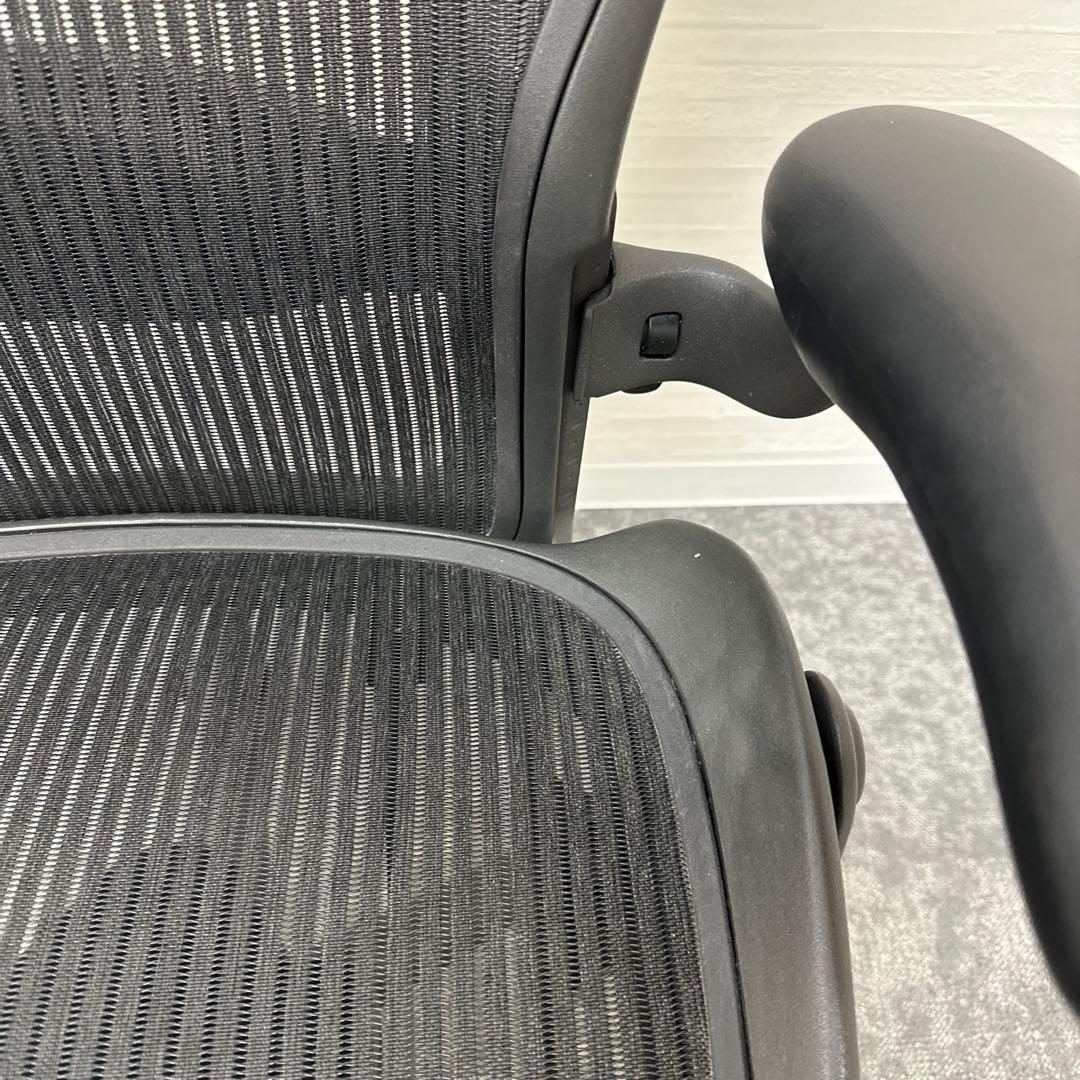
Walk into any office furniture shop and the choice presents itself as a style question: the technical mesh chair or the traditional leather one. It is not a style question. It is a question about heat, hours, maintenance and how the material ages — and the right answer depends on your room, your climate and how long you sit.
This guide compares mesh and leather across the factors that actually decide comfort over years of use, with honest downsides on both sides. The short version: mesh wins for most home offices, leather wins for short sessions and formal rooms — and the material matters less than the chair's adjustment.
Direct answer: Mesh wins for most home offices: it stays cooler over long days and needs little maintenance. Leather suits short sessions and formal rooms, and the chair's adjustment matters more than the material.
The short version
| Best for long days | Mesh — breathable, consistent support, no heat build-up |
| Best for short sessions | Leather — immediate comfort, formal look |
| Best for warm rooms | Mesh, clearly |
| Longest lasting | Good mesh outlasts bonded leather; real leather outlasts both but costs far more |
| Easiest to maintain | Mesh — vacuum and wipe; leather needs conditioning |
In this guide
- Breathability: mesh wins, and it is not close
- Comfort over eight hours
- Durability: what actually wears out
- Maintenance and cleaning
- Support and ergonomics
- Looks and the video-call test
- Price: what $300 buys in each material
- Allergies, pets and static
- Who should choose mesh
- Who should choose leather
- Frequently asked questions
Breathability: mesh wins, and it is not close
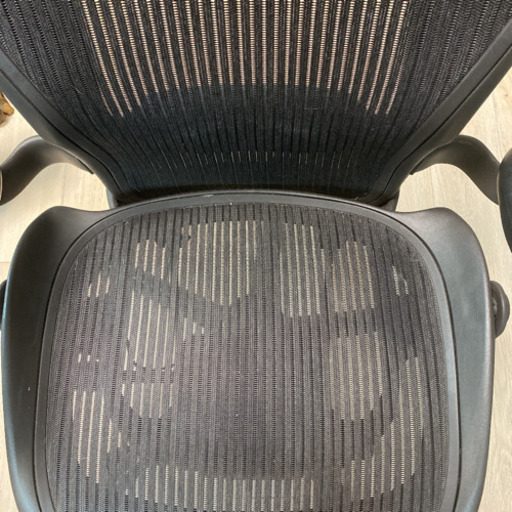
Mesh is mostly air. Heat and moisture pass through it instead of pooling against your back, which is why a mesh chair still feels neutral after six hours. Leather — and bonded leather especially — is a sealed surface: it traps heat, sticks to skin in warm rooms, and turns a summer afternoon into a slow slide off the seat.
The difference is measurable in comfort terms: in a room above about 24°C, most people notice the heat build-up on leather within an hour. Below that, in a cool room, the gap narrows. If your office gets afternoon sun, this factor alone should decide the question.
Comfort over eight hours
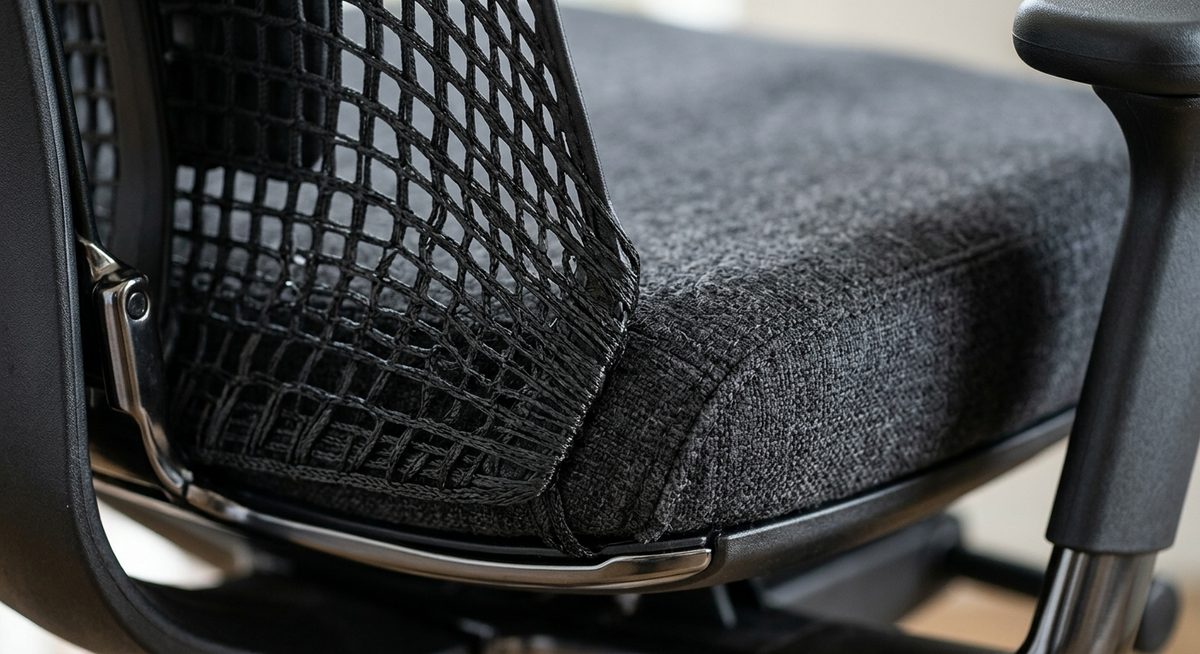
Leather wins the first ten minutes. A padded leather seat feels immediately soft and welcoming, and the material warms to body temperature quickly. Mesh feels firmer at first — some people describe it as sitting on a trampoline — and takes a week to get used to.
Over a full day the order reverses. Foam padding compresses under sustained load, so a leather seat that felt plush at 9 a.m. can feel flat by 3 p.m. Mesh distributes weight across a tensioned surface that does not compress, so the support at hour seven resembles the support at hour one. Long-session workers should weight the eight-hour feeling, not the showroom feeling.
Durability: what actually wears out
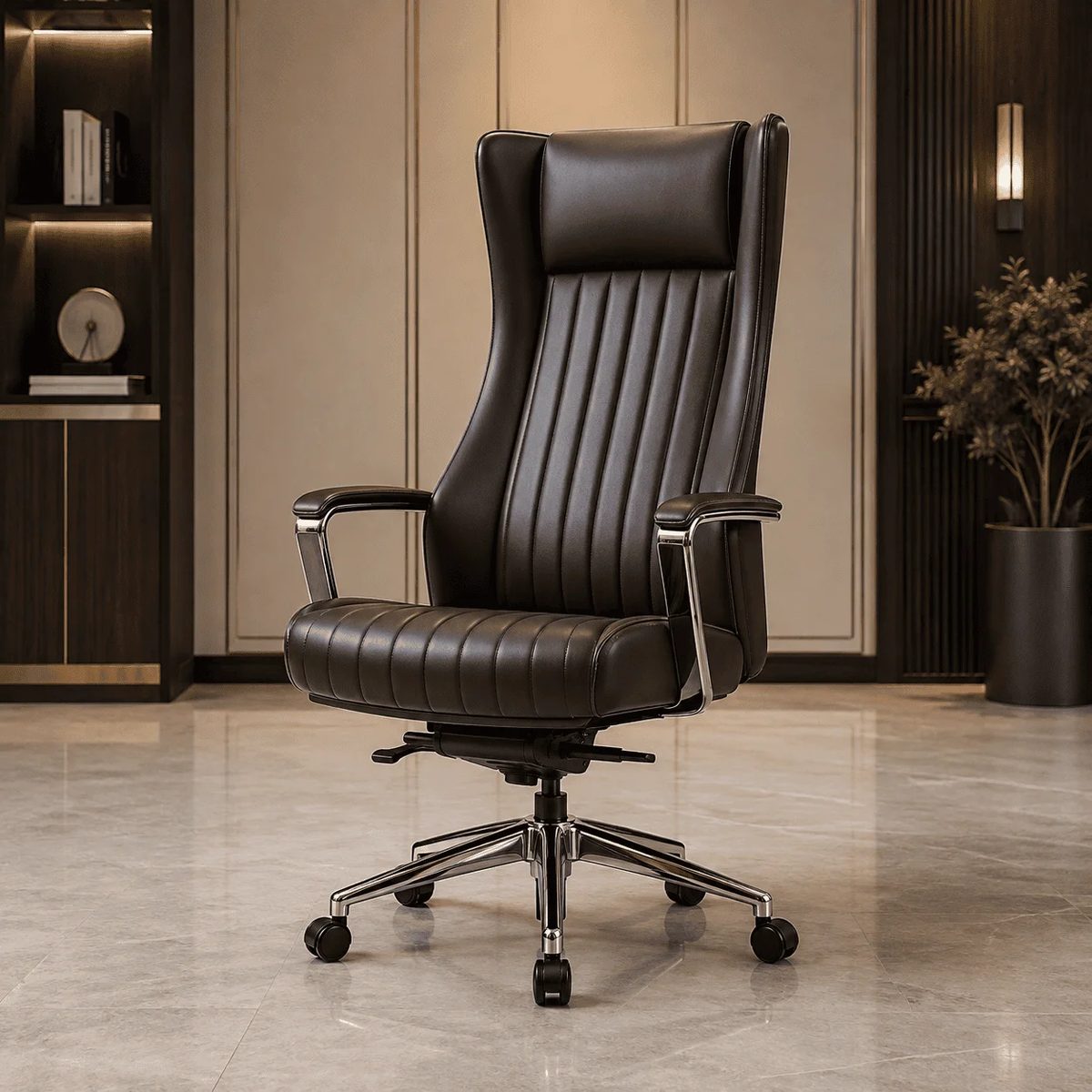
Good mesh lasts: the material itself rarely fails, and when mesh chairs die it is usually the frame, the gas lift or the armrests. Bonded leather — the material on most sub-$300 leather chairs — is the weak point of its category: the bonded surface cracks and peels, typically starting at the seat edges and armrests, after two to four years of daily use.
Real leather lasts far longer but does not appear on chairs under $300 in any meaningful sense — at this price, 'leather' almost always means bonded leather or PU. If a listing says 'leather' without specifying, assume bonded. Check the spec sheet for the exact material before buying.
Maintenance and cleaning
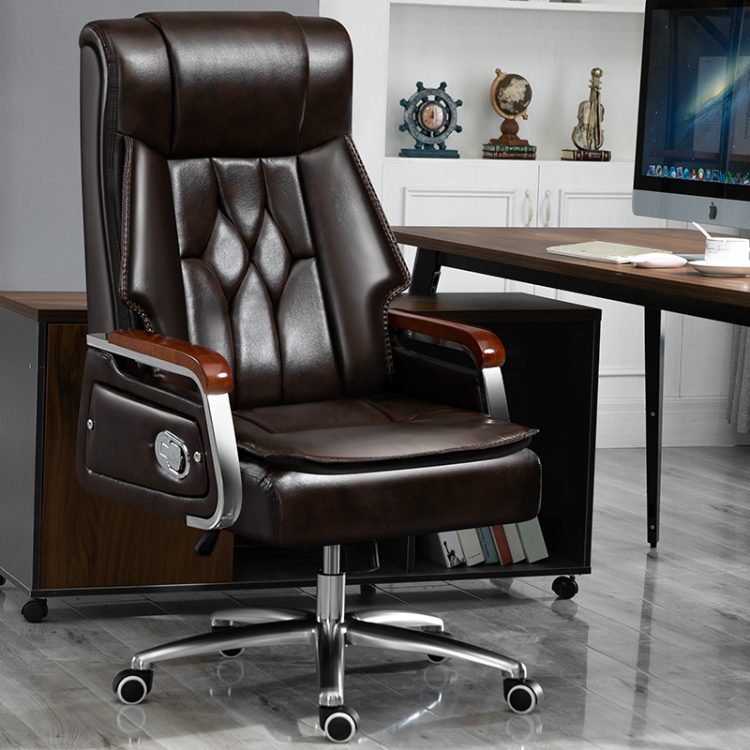
Mesh needs a vacuum and an occasional wipe. Spills pass through rather than pooling, and there is nothing to condition or polish. The main maintenance issue is dust collecting in the weave, which a vacuum nozzle handles in a minute.
Leather needs more: regular wiping, occasional conditioning to stop the surface drying and cracking, and quick attention to spills. Bonded leather cannot be conditioned back to health once it starts peeling — at that point the only fix is a cover or a new chair.
Support and ergonomics
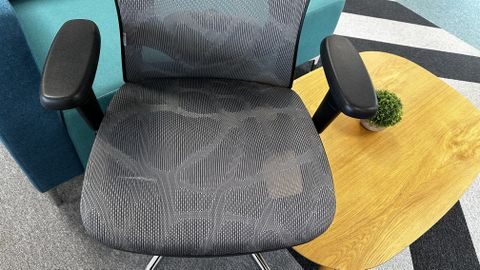
Mesh has a structural advantage: the backrest can be tensioned to provide lumbar support without a separate pad, and the flexible surface follows the spine as you move. The best mesh chairs — including several in our Best office chairs under $300 guide — build the lumbar curve into the mesh itself.
Leather chairs usually rely on padding shape for support, which means the lumbar curve is fixed and the padding compresses over time. Adjustable lumbar pads exist on leather chairs too, but they are less common under $300. If lumbar support is your priority, mesh gives you more options at this price.
Looks and the video-call test
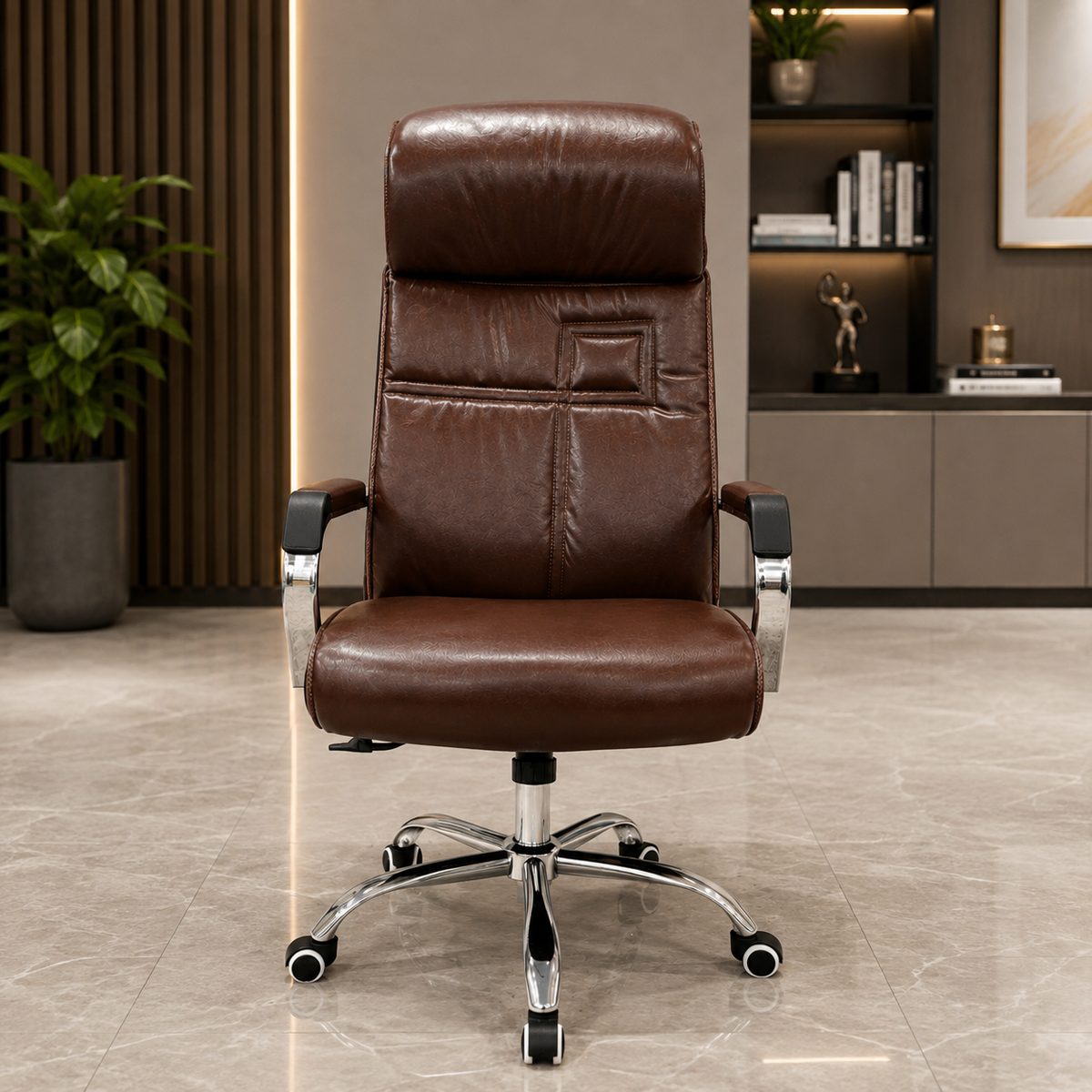
Leather looks like authority. On a video call, a leather high-back reads as established and deliberate; mesh reads as technical and modern. Neither is better in absolute terms — it depends on the impression you want and the room the chair sits in.
The practical note is that mesh chairs look the same after three years, while bonded leather chairs look progressively worse as the surface wears. If the chair will be visible on camera daily, that ageing curve matters.
Price: what $300 buys in each material
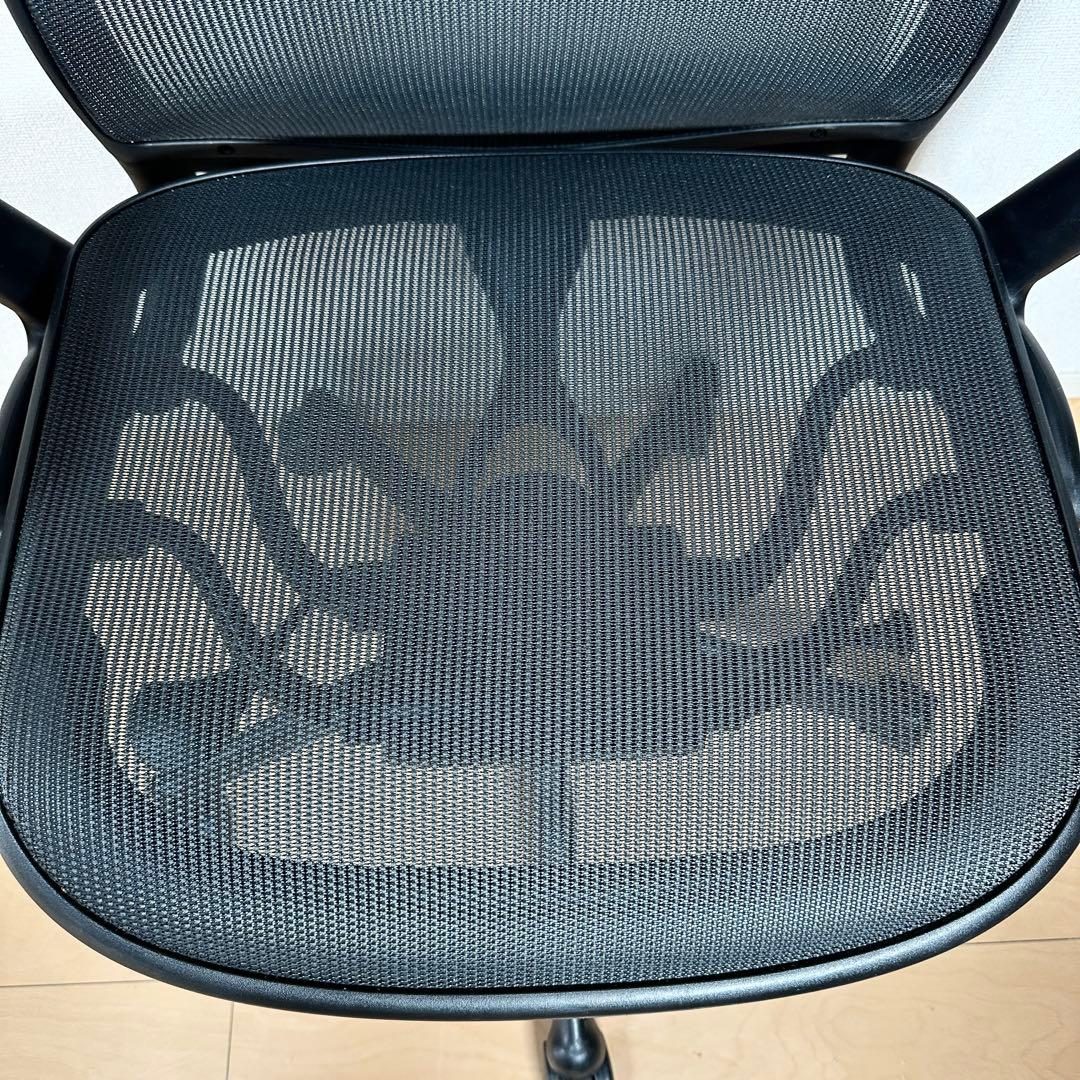
Under $300, mesh buys more chair: the material is cheaper to make well, so more of the budget goes into the frame, the mechanism and the adjustment. A $200 mesh chair can have a genuinely good tilt mechanism and adjustable lumbar support.
The same $200 in leather buys the look and the padding, with simpler adjustment underneath. That is a fair trade for two-hour sessions in a formal room; it is a poor trade for eight-hour days. Our Best office chairs under $300 guide shows the difference directly — compare the spec tables, not the photos.
Allergies, pets and static
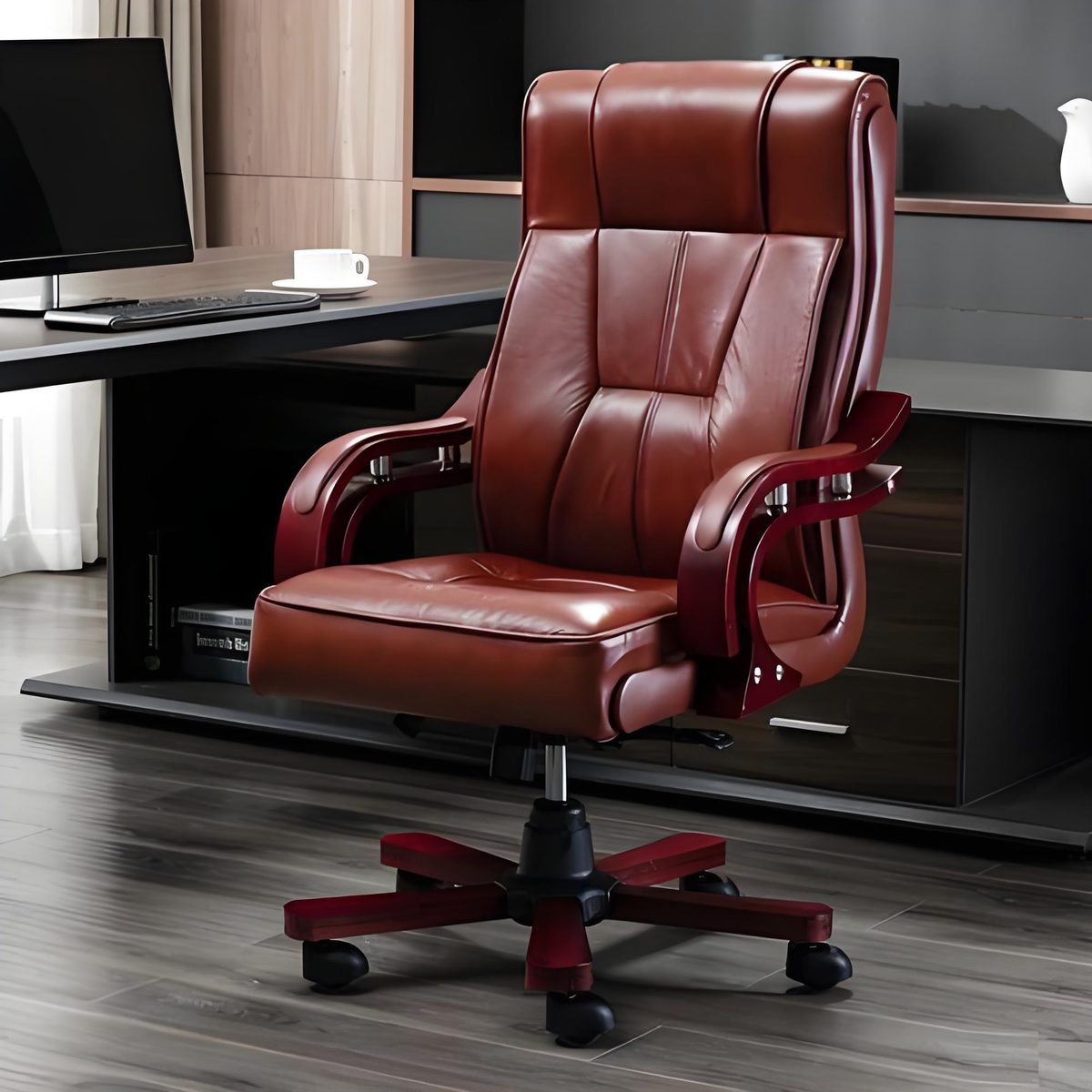
Mesh collects pet hair in the weave and can hold dust, which matters for allergy sufferers — though it vacuums clean easily. Leather wipes clean of hair in seconds but attracts dust through static, and bonded leather can develop a sticky surface in humidity.
For pet owners, leather is the easier daily clean; for allergy sufferers, mesh with a weekly vacuum is usually the better choice. Neither material is a health decision on its own — the room's ventilation matters more.
Who should choose mesh
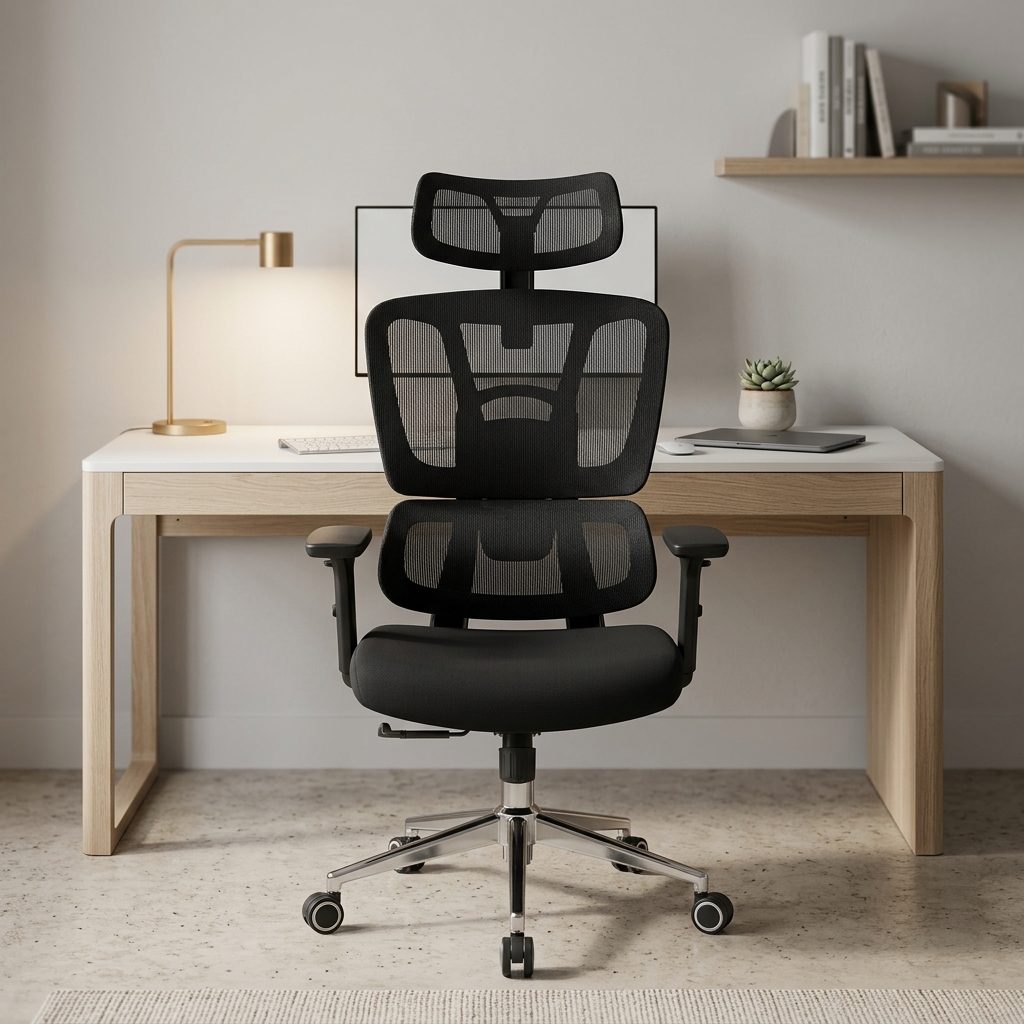
Choose mesh if you sit more than five hours a day, if your room is warm or sunny, if you want the chair to look the same in three years, or if lumbar adjustment matters to you. Most home-office workers fit at least two of those, which is why mesh dominates our recommendations.
Within mesh, prioritise adjustable lumbar support and a tensioned back over padding thickness. The SIHOO M18 and Hbada E3 Air in our Best office chairs under $300 guide are the two best examples under $300.
Who should choose leather
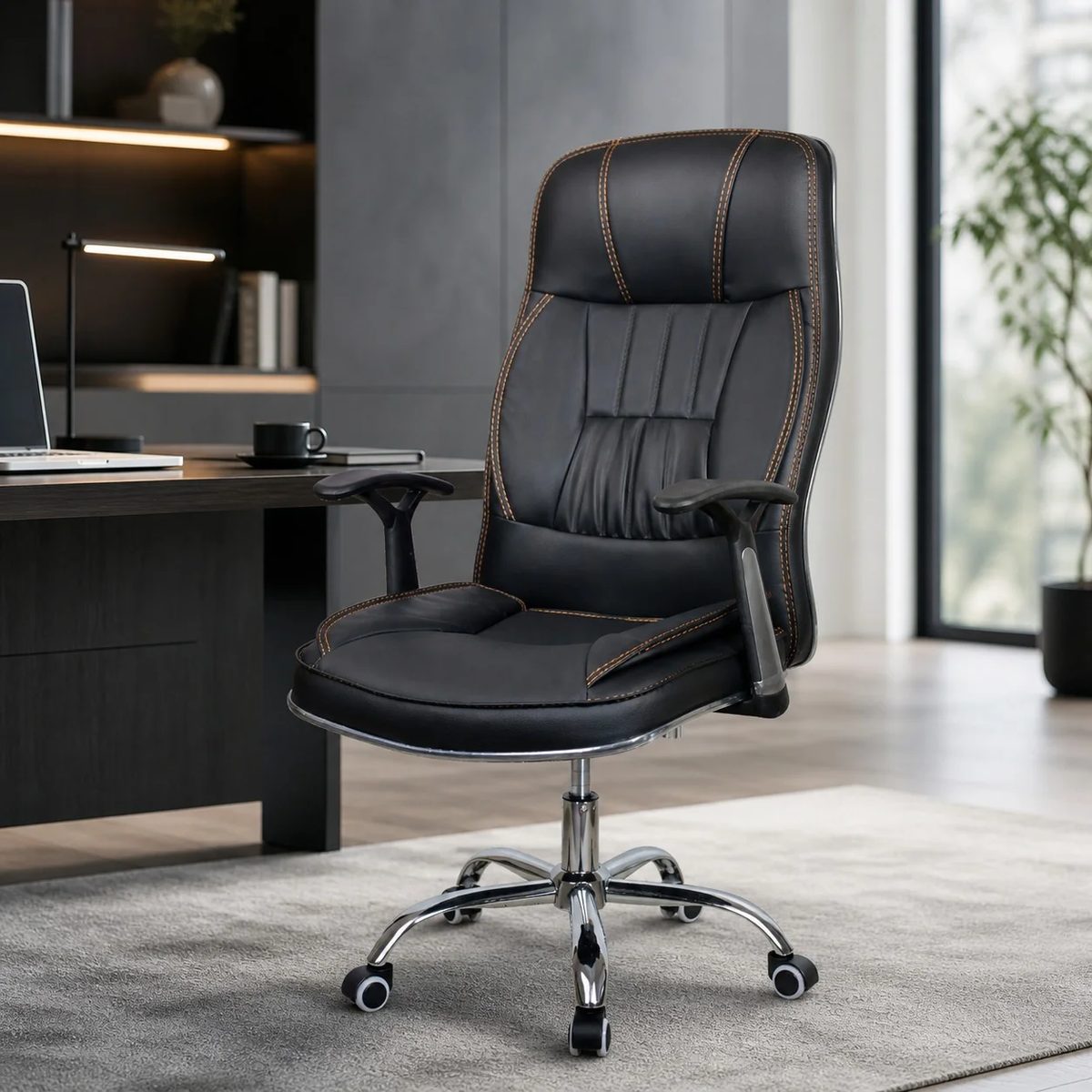
Choose leather if you sit for short sessions, want a formal look for a client-facing room, or simply prefer the feel of a padded seat. Leather suits cooler rooms, and it suits people who sit upright and move often rather than reclining for hours.
If you choose leather under $300, go in with open eyes about bonded leather's lifespan: two to four years of daily use before visible wear. Treat it as a consumable with a known life, not a lifetime purchase, and it is a reasonable buy.
Frequently asked questions
Are mesh chairs better than leather?
For most home-office workers, yes — mesh breathes, keeps its support over long days and ages better. Leather wins for short sessions and formal rooms.
Does bonded leather peel?
Yes, usually within two to four years of daily use. Bonded leather is leather fibres bonded to a backing, and the surface layer cracks and flakes with wear and heat.
Is mesh comfortable for long hours?
Yes, once you adjust to it — usually within a week. Mesh distributes weight evenly and does not compress like foam, so support stays consistent through the day.
Which is easier to clean?
Leather wipes clean faster day to day; mesh needs a vacuum for dust and hair in the weave. Neither is difficult — the difference is minutes per week.
Do mesh chairs sag?
Cheap mesh can stretch over years, but quality mesh on a tensioned frame holds its shape well. Sagging is usually a frame or tension problem, not the mesh itself.
Can I get a real leather chair under $300?
Not a good one. At this price, 'leather' almost always means bonded leather or PU. Genuine top-grain leather chairs start well above $300.
Which is better for a warm room?
Mesh, clearly. Leather traps heat against your back; mesh lets air through. In a room above 24°C the difference is noticeable within an hour.
Does the material affect lumbar support?
Indirectly: mesh chairs more often have adjustable lumbar systems at this price, because the flexible back makes them easier to engineer. The adjustment matters more than the material itself.